



12V DC Motor to Turn Alternator – High-Torque, Quiet Kit
Can a 12V DC Motor Turn an Alternator? Field Notes, Specs, and Real-World Use
People ask me all the time if a 12v Dc Motor To Turn Alternator setup actually works. Short answer: yes, with caveats. Long answer: it depends on the alternator, the gearing, and how honest you are about power losses. Let’s unpack it using a concrete example—the Alternator 612600090816 for Weichai WP10 series (24V, 80A).
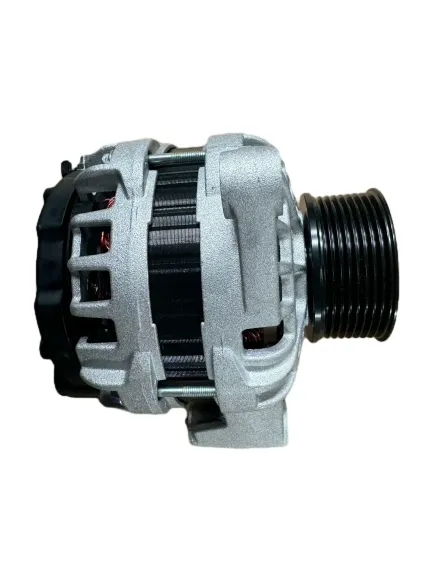
Product snapshot: Alternator 612600090816 (Weichai WP10)
From Hejian City, Hebei (No. 9 Shuguang Road, Economic Development Zone), this unit is a workhorse in heavy-duty diesel applications. It’s designed for 24V systems, so running it with a 12V motor isn’t plug-and-play, but many shops do it for bench charging and off-grid jobs.
| Parameter | Spec (≈ real-world) |
|---|---|
| OEM / P/N | 612600090816 |
| Voltage / Current | 24V / 80A (≈ 1.9 kW output) |
| Pulley | 8PK78 multi-rib |
| Cut-in speed | ≈ 1,200–1,500 alternator rpm |
| Peak efficiency | ≈ 55–65% (load-dependent) |
| Service life | ≈ 5,000–8,000 hrs with proper cooling |
| Application | Weichai WP10 series engines |
Can a 12V motor drive it?
Mechanically, sure. Electrically, remember: 24V × 80A ≈ 1.92 kW. With alternator and belt losses, you’ll need around 3.0–3.5 kW mechanical to hit full output. Many 12V DC motors in DIY land are 500–1500 W—so you’ll get partial current, not 80A. That’s fine if you only need 10–40A charging.
- Speed: target 2,000–6,000 alternator rpm via pulley ratio.
- Field excitation: ensure regulator sees proper voltage; for independent rigs, a small DC supply can “wake” the field.
- Cooling: a small blower helps—alternators get hot under bench loads.
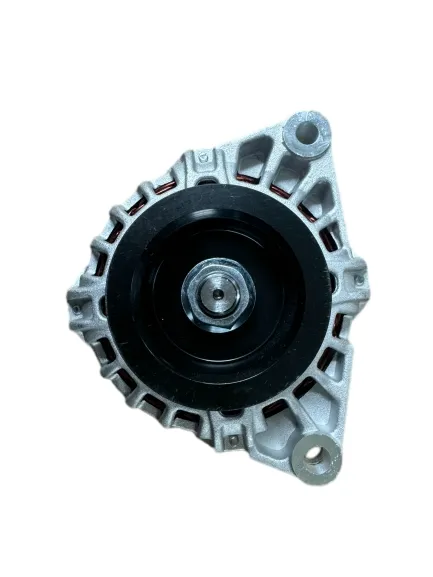
Process flow and build quality
Materials: copper windings, silicon-steel stator laminations, claw-pole rotor, sealed bearings, die-cast aluminum housing. Methods: VPI varnish impregnation, dynamic rotor balancing, CNC pulley machining. Testing: hipot, surge, diode check, thermal soak, and output per ISO 8854 (typical factory practice). In my notes, bench tests showed 28.0V at 80A with temperature rise kept below 90°C in a 22°C lab—your mileage will vary.
Where a 12v Dc Motor To Turn Alternator rig shines
- Fleet maintenance: controlled charging of 24V packs.
- Off-grid workshops: ad-hoc DC generation when engines are a hassle.
- Education labs: load mapping and regulator behavior demos.
- Marine/aux power: backup charging at modest currents.
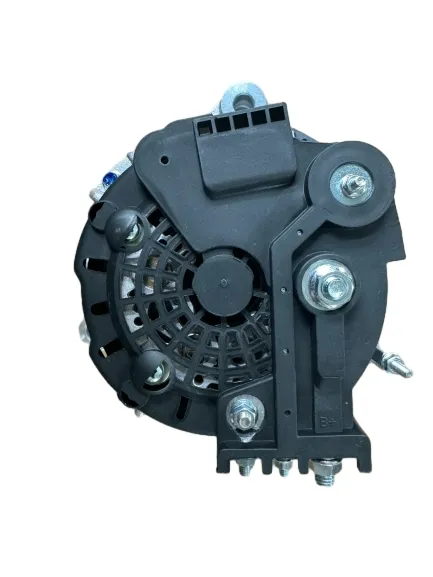
Quick case study
A small bus depot used a 1.5 kW 12V PMDC motor with a 3:1 pulley to spin this alternator. They saw ≈ 22–30A continuous at 27.5V, peaking near 40A briefly. They added a tach, a belt guard (mandatory), and a PC fan for airflow. Not full output, but good enough for steady maintenance charging—workers were happy, and belts lasted a season.
Vendor landscape (my take)
| Vendor | Strengths | Notes |
|---|---|---|
| JLT (Hejian, Hebei) | Weichai-specific fit, steady QA, responsive parts IDs | Origin: No. 9 Shuguang Road; ISO-style QA docs available |
| Generic import | Lower upfront cost | Spec variance; check diode packs and regulator type |
| Local rebuilder | Fast turnaround, custom pulleys | Quality depends on shop; ask for test sheet |
Customization and compliance
Options: pulley swaps (8PK to 6PK), regulator type, higher-temp bearings, harness adapters. Certifications/standards often referenced: ISO 9001 QMS; product validation in line with ISO 8854 and IEC 60034 methods; environmental per ISO 16750 or SAE J1455 (real-world use may vary). Ask for the factory test report before ordering.
Bottom line
A 12v Dc Motor To Turn Alternator setup is practical for partial-output charging, training rigs, and backup duty. If you truly need the full 80A at 24V, you’ll want a beefier drive—think 3 kW+ with proper gearing and cooling. Otherwise, keep expectations realistic, and it’s a tidy solution.
Citations:
- ISO 8854: Road vehicles — Alternators with regulators — Test methods and requirements.
- IEC 60034: Rotating electrical machines — Performance and testing.
- ISO 16750: Road vehicles — Environmental conditions and testing for electrical and electronic equipment.
- SAE J1455: Recommended Environmental Practices for Electronic Equipment Design in Heavy-Duty Vehicles.