



24V Alternator for Sale with OEM Quality & Warranty?
24V alternators for heavy equipment: what actually matters before you buy
I spent a day in Hejian City, Hebei—No. 9 Shuguang Road, to be precise—walking the line where workhorse charging systems are born. If you’re hunting for [24v alternator for sale], here’s the field report you won’t get from glossy brochures. The quick takeaway: spec sheets are helpful, but real-world load profiles, heat, dust, and how the unit is tested are what keep your machine earning money.
Industry trends I’m seeing
- Shift to 24V on construction, mining, and bus fleets to stabilize voltage under heavy accessory loads (telematics, HVAC, LED arrays, DEF systems).
- Higher-temp components (200°C class diodes, improved varnish) as engines downsize and under-hood temps rise.
- Smarter regulators: remote-sense, D+ and LIN options; some fleets demand IP66 housings with sealed bearings.
- Dual-voltage strategies for mixed 12V/24V subsystems, but with careful grounding and EMC planning.
Spotlight: Alternator T430452 For Carterpillar (and its 24V siblings)
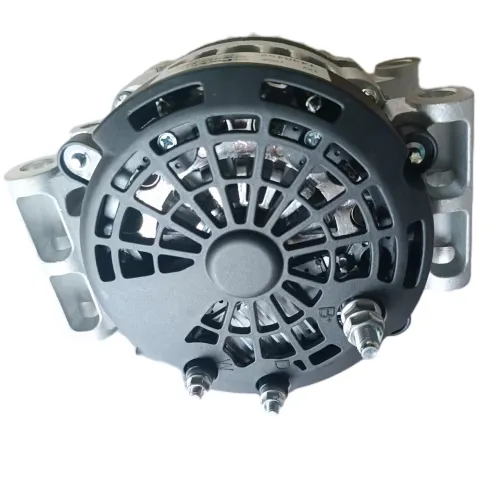
The factory catalog lists a robust 12V/100A unit—Alternator T430452—for certain Caterpillar/Carterpillar applications. Why include it in a 24V roundup? Because the same manufacturing cell builds 24V variants with similar housings, bearings, and process controls. In other words, the DNA is shared. Here are baseline specs and typical 24V options as seen on the line.
| Item | Spec (T430452) | 24V Variant (typical) |
|---|---|---|
| OEM / Reference | T430452 | Cross per build sheet (≈70–150A) |
| Voltage / Current | 12V, 100A | 24V, ≈70–120A (real-world use may vary) |
| Pulley | Config per order (1V/2V/serpentine) | Custom ratios; overrun pulley optional |
| Application | Caterpillar/Carterpillar equipment | Construction, mining trucks, buses, marine aux |
Quick test snapshot from the bench: a 24V/110A unit built on this line held ≈14.5 kW peak mechanical input at 6,000 rotor rpm, with ripple below 1V pp and hot-output at 85–90% of cold—solid for a sealed-frame design.
How it’s built (and why that matters)
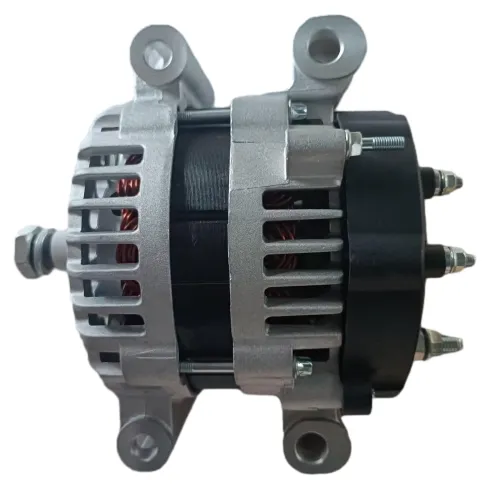
- Materials: oxygen-free copper windings; high-silicon steel laminations; NSK/SKF-grade bearings; epoxy powder coat housings.
- Methods: CNC pulley machining; automatic coil winding; vacuum impregnation; diode press-fit with heat-sink paste; torque-trace assembly.
- Testing: ISO 8854 output curves; ISO 16750 vibration/thermal cycling; ISO 7637-2 EMC; salt-spray per IEC 60068.
- Service life: ≈3,000–5,000 engine hours in mixed duty (ambient and maintenance dependent).
- Industries: construction, agriculture, mining haulage, municipal fleets, marine gensets.
Vendor comparison (brief, real-world oriented)
| Vendor | Voltage/Amps | Certs/Standards | Lead Time | Customization |
|---|---|---|---|---|
| JLT (Hejian, Hebei) | 12V 70–150A; 24V 70–150A | ISO 9001; tests to ISO 8854 / 16750 / 7637-2 | ≈7–20 days (build-to-order) | Pulleys, clocking, regulators, coatings |
| Delco Remy (reference) | 12/24V up to ≈275A | OEM validations; UNECE R10 on many models | Stock-dependent | Model-specific |
| Prestolite/Leece-Neville (reference) | 24V ≈70–200A | Fleet-heavy; harsh-duty lines | Varies by region | Fleet programs |
Customization and quick use-cases
Need remote-sense for long cable runs? A dust-shielded rear cover? Or clocking to clear a compressor bracket? The shop can tweak pulleys, mounting ears, regulator logic (A-C-F/LIN), and paint. In the field, I’ve seen these 24V builds on graders in desert mines and on city buses where idle output and EMC are critical. Many customers say the hot-output stability is what sold them.
Case study: heat, dust, and a loader that wouldn’t quit
A quarry loader switching from a generic 24V/90A to a 24V/110A unit from this line reported fewer low-voltage alarms after night shifts. Service intervals moved from 9 months to roughly 18 months; bearing wear dropped, likely thanks to the sealed design and better balance. As one tech put it, “It just holds voltage when the lights, HVAC, and telemetry pile on.”
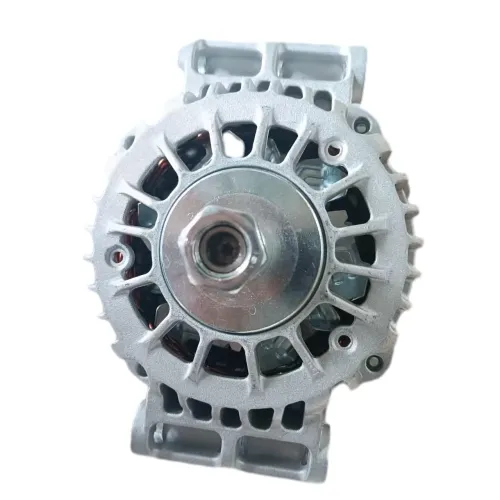
If you’re shortlisting a 24v alternator for sale, ask for output curves (cold and hot), EMC data, and details on varnish class and bearing suppliers. And, to be honest, confirm lead times—supply chains are better than 2022, but spikes still happen. For Caterpillar-style mounts, the T430452 family is a safe starting point, with 24V options built on the same tooling. When uptime pays the bills, that’s what you want.
Sources and standards:
- ISO 8854:2012 Road vehicles — Alternators with regulators — Test methods and general requirements.
- ISO 16750 (Parts 2–5) Road vehicles — Environmental conditions and testing for electrical and electronic equipment.
- ISO 7637-2:2011 Road vehicles — Electrical disturbances from conduction and coupling — Part 2.
- UNECE Regulation No. 10 (R10) — Electromagnetic compatibility.
- SAE J1455 — Recommended environmental practices for electronic equipment design in heavy-duty vehicles.