



Alternator Slip Rings Function: Low-Friction, Long-Life
Alternator 101211-7960: What the Alternator Slip Rings Actually Do in Hard-Working Machinery
If you’ve ever wondered how an excavator’s charging system keeps its cool in dust, heat, and vibration, it usually comes down to the small copper bands and brushes doing laps inside the alternator. The Alternator Slip Rings Function is simple on paper—deliver current to a rotating field—but in the field it’s a durability test.
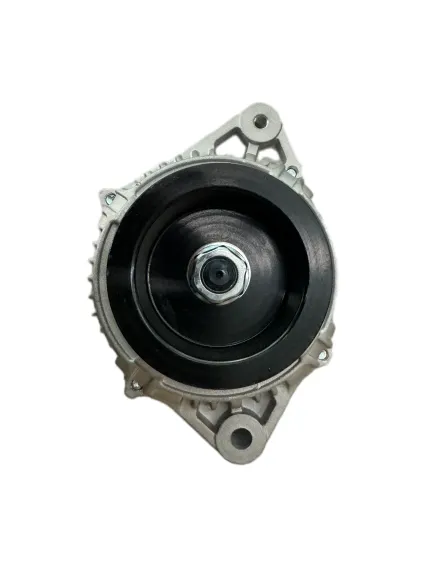
Quick context from the yard
On Komatsu PC200-7/8 units (6D107 engines), many customers say the alternator’s slip-ring/brush interface is where uptime lives or dies. I’ve seen fleets swap “cheap-but-fast” parts and then quietly go back to a tighter-spec unit after a storm season. It’s not glamorous, but it’s critical.
Product snapshot: Alternator 101211-7960 For CONSTRUCTION MACHINERY SERIES
| OEM | 101211-7960 |
| Voltage / Current | 24 V / 60 A |
| Pulley | Slots84-39 (field-fit verified) |
| Applications | PC200-7; PC200-8; 6D107 |
| Slip ring material | Cu alloy, hard silver plating ≈8–12 μm (real-world may vary) |
| Brush material | Carbon-graphite; silver-graphite optional |
| Service life (typ.) | ≈4,000–6,000 h in quarry duty (maintenance dependent) |
| Origin | No. 9 Shuguang Road, Economic Development Zone, Hejian City, Hebei Province |
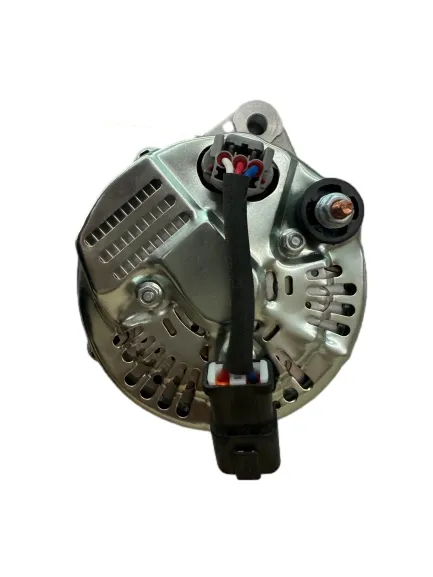
How the slip rings pull their weight
The Alternator Slip Rings Function is to transfer excitation current into the spinning rotor without tangling wires. In practice: concentric rings + spring-loaded brushes = a controlled, low-resistance, low-noise pathway. The best units keep surface roughness around Ra ≤0.4 μm, maintain contact pressure ≈150–250 g/brush, and balance rotors to ISO 1940-1 G6.3. Too smooth and you glaze; too rough and you eat brushes. It’s a dance.
Manufacturing and testing flow (what I look for)
- Materials: oxygen-free copper rings, silver plating for lower contact resistance; resin-bonded graphite brushes.
- Machining: CNC turning; roundness ≤0.01 mm; runout ≤0.03 mm; careful deburr.
- Plating: Ag layer ≈8–12 μm; adhesion cross-hatch checked.
- Assembly: brush spring rate verified; lead solder joints pull-tested.
- Validation: dielectric and output per IEC 60034-1; rotor balance per ISO 1940-1; vibration IEC 60068-2-6; salt spray ASTM B117 (96 h class typical).
- Endurance: bench at 6k–12k rpm, 50–80% rated current, 500 h; brush wear target ≈0.2–0.8 mg/Ah.
Trends I’m seeing
More silver content in brushes for low-temperature starts, anti-glaze micro-texturing, and “smart” regulators logging duty cycles. And yes, fleets quietly ask for thicker plating even if the spec sheet doesn’t brag about it.
Customization options
- Ring plating thickness and finish (matte vs polished)
- Brush grade (pure graphite vs Ag-graphite) and spring force
- Pulley and harness variations for PC200-7/8 retrofits
- Ingress protection targets (IP54≈IP55) for dusty sites
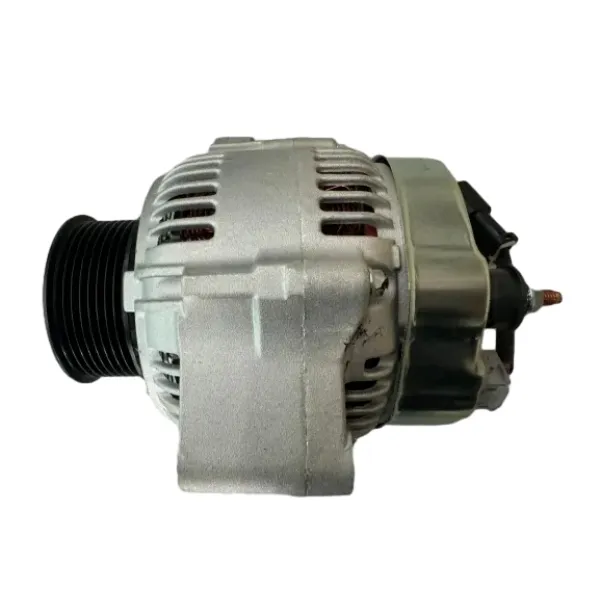
Vendor comparison (field reality)
| Vendor | Lead Time | Price (≈) | QC/Certs | Notes |
|---|---|---|---|---|
| JLT (Hebei) | 7–15 days | Mid | ISO-style QMS; PPAP on request | Good brush consistency; responsive on tweaks |
| OEM Dealer | Stock–7 days | High | OEM validated | Easiest warranty; priciest |
| Aftermarket X | 10–25 days | Low | Mixed | Inspect ring plating; some variability |
Use cases and a quick case study
Scenarios: quarry shifts with abrasive dust, urban demo with stop-start idling, cold-morning starts on remote sites. In one northern quarry, swapping to 101211-7960 units with upgraded brushes cut alternator-related downtime by ≈18% over 9 months. A senior tech told me, “we stopped chasing voltage gremlins,” which, to be honest, is what everyone wants from the Alternator Slip Rings Function.
Testing notes from that fleet: average brush wear measured ≈0.35 mg/Ah; post-run ring surface stayed within Ra 0.45 μm; no abnormal pitting after ASTM B117 96 h equivalent.
Final thought
The Alternator Slip Rings Function looks humble, but when materials, plating, and balance hit spec, the whole charging system gets calmer. It’s one of those parts you only notice when it’s wrong.