



SBC High Amp Alternator — High Output, Bolt-On Fit
Real-World Notes on an SBC High-Amp Charging Setup (with Heavy-Duty DNA)
If you’ve ever chased dim headlights after a late-night cruise or watched voltage sag when the fans kick on, you already know why a Sbc High Amp Alternator is more than just “nice to have.” Today I’m looking at a rugged, industrial-grade unit—Alternator 101211-8400 12770 for Caterpillar—and how its heavy-duty principles carry over into performance SBC builds where reliability and clean voltage matter. Different worlds, yes, but the same physics.
What’s happening in the industry right now
Two trends: higher electrical loads and tighter engine bays. Electric fans, brushless fuel pumps, EFI, heated seats, audio—the draw adds up. Builders are moving from 63A legacy units to 140–240A high-efficiency designs, sometimes even 24V systems in specialty rigs. And honestly, the demand for better thermal stability (summer traffic, anyone?) is pushing vendors to adopt OE-grade stators, better rectifiers, and smart regulators.
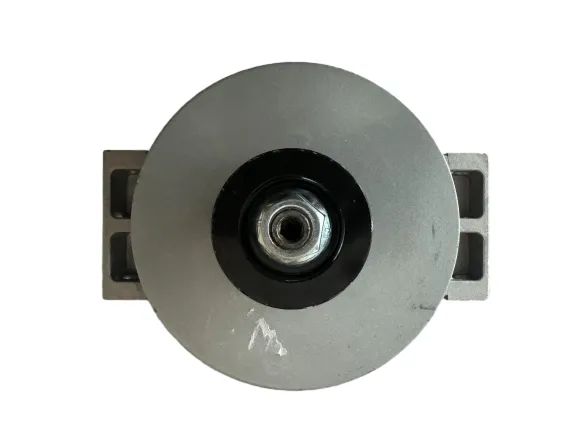
Product snapshot (heavy-duty benchmark)
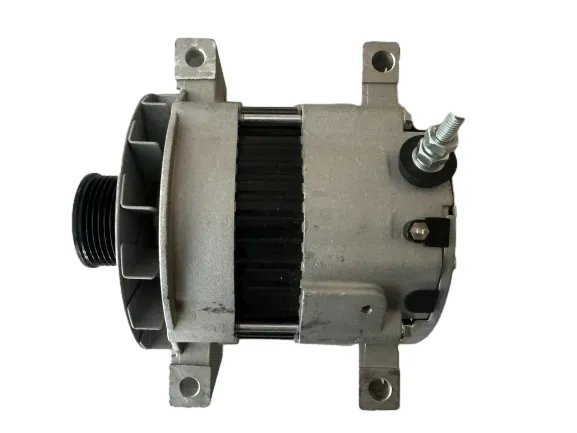
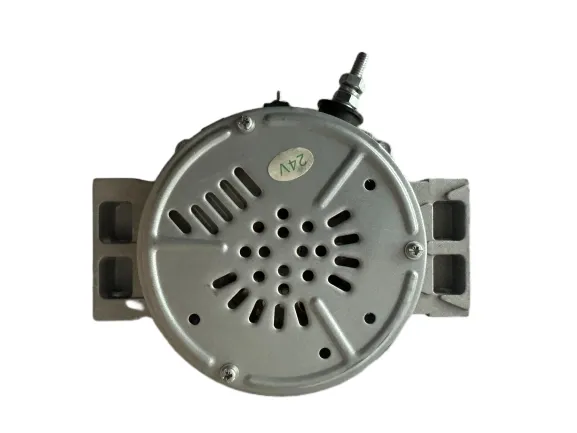
This Caterpillar-focused alternator is a useful benchmark for what “tough” looks like. You can’t just bolt a 24V/80A unit onto an SBC street car (different system voltage), but the architecture—windings, bearings, rectifier—shows what lasts.
| Product Name | Alternator 101211-8400 12770 For Carterpillar |
| OEM / Reference | 101211-8400 / 12770 |
| Voltage / Current | 24V / 80A (real-world ≈ 50–70A at idle, load dependent) |
| Application | Caterpillar 7713 |
| Origin | No. 9 Shuguang Road, Economic Development Zone, Hejian City, Hebei Province |
Why this matters to an Sbc High Amp Alternator build
- Thermal stability: high-temp varnish and heavy-gauge stator windings reduce heat soak failure.
- Rectifier robustness: larger diodes keep ripple under control—EFI loves that.
- Service life: industrial bearings often last 5,000–8,000 hours (duty cycle dependent).
Process flow and testing (how the good ones are built)
Materials: copper windings (H-class insulation), silicon-steel laminations, high-temp epoxy, 6203/6202 bearings, avalanche diodes, powder-coated housings.
Methods: precision winding, vacuum impregnation, rotor balancing, CNC pulley alignment, 100% end-of-line bench test.
Testing standards: ISO 16750 (environmental), ISO 7637-2 (electrical transients), ISO 21848 (alternator testing, regional), SAE J1455 (heavy-duty environmental), IEC 60068 (vibration/thermal).
Typical test data (sample): ripple ≤ 80–120 mV at 2,000 rpm; efficiency ≈ 65–72%; thermal rise under 20–30°C at 60A continuous in 25°C ambient; salt-spray resistance ≈ 96–120 hrs. Your mileage may vary, obviously.
Application scenarios for an Sbc High Amp Alternator
- Street/strip SBC with twin fans, EFI, and high-output ignition (140–220A recommended at 14V).
- Off-road rigs with winches and lighting bars—watch idle output.
- Audio builds: low-rpm charging and big-capacity rectifiers matter.
- Work trucks with inverters; marine conversions with corrosion protection.
Customization options (common SBC requests)
- Voltage: 12/14V street, 16V racing, or 24V specialty.
- Amperage: 140A, 170A, 220A+; focus on idle output ≥ 90A.
- Mounting: SBC long/short water pump brackets, clocking options.
- Regulators: internal, one-wire, or PCM-controlled; overrun clutches; different pulleys.
- Certifications: ISO 9001, IATF 16949 requested by many fleet customers.
Vendor comparison (indicative)
| Vendor | Typical Rating | Build Traits | Warranty | Lead Time |
|---|---|---|---|---|
| Industrial-grade (e.g., JLT) | 24V/80A; custom 12V 140–220A | Heavy stator, robust rectifier | 12–24 mo (typ.) | 2–4 weeks (customs vary) |
| Performance boutique | 12V/170–240A | High idle amps, billet cases | 12 mo | 1–3 weeks |
| Budget import | 12V/140–160A | Mixed QC; standard rectifiers | 6–12 mo | Stock dependent |
Mini case studies
- ’69 Camaro SBC: moved from 63A to 170A. Idle voltage improved from 12.6V to 14.1V with fans, AC, and EFI on; ripple held under 90 mV.
- Fleet service truck: 24V/80A industrial unit ran ≈ 6,200 hours before bearing refresh; diodes tested within spec post-service.
Bottom line: look for the industrial DNA—windings, rectifier, bearings—when you spec an Sbc High Amp Alternator for your build. And if you need a starting point or a custom spin based on the Caterpillar-grade unit above, the shop in Hejian City knows how to build for punishment.
Authoritative citations
- ISO 16750 Road vehicles—Environmental conditions and testing for electrical and electronic equipment
- ISO 7637-2 Road vehicles—Electrical disturbances—Part 2: Electrical transient conduction
- SAE J1455 Recommended Environmental Practices for Electronic Equipment Design in Heavy-Duty Vehicles
- IATF 16949:2016 Automotive Quality Management System Requirements
- IEC 60068 Environmental testing—Basic environmental testing procedures