



24v Alternator: The Core Power Source of High Voltage Power Systems
In high voltage power demand scenarios such as commercial vehicles, construction machinery, and ships, 24v Alternators have become the core components to ensure the operation of equipment electrical systems with stable high voltage output and strong power supply capabilities. It is different from low-voltage AC generators, designed specifically for 24 volt circuits, and can efficiently meet the power needs of multiple devices operating simultaneously. Its performance directly affects the efficiency and reliability of the entire equipment.
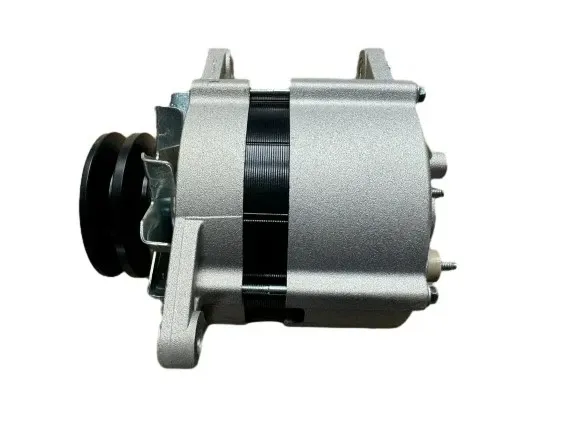
The core competitiveness of 24v Alternator lies in the combination of high efficiency and adaptability
The 24v alternator 100 amp adopts a multi-phase winding design internally. By optimizing the electromagnetic induction efficiency of the stator and rotor, it can output a stable 24V voltage within the normal speed range of the engine. The power output can reach 800 watts to 2000 watts, which is sufficient to support the simultaneous operation of multiple high power consuming devices such as air conditioning, hydraulic pumps, and vehicle communication. Structurally, durability is emphasized, and high wear resistant ball bearings are selected to withstand continuous operation at tens of thousands of revolutions per minute; The shell is made of die cast aluminum alloy material, which combines lightweight and impact resistance, and can cope with severe vibrations and temperature fluctuations during equipment operation.
The key dimensions for evaluating the quality of 24v Alternators include output stability, structural strength, and compatibility
The stability requirement for 24v alternator 200 amp output is to control voltage fluctuations within a very small range when the engine speed changes, ensuring that precision electronic components are not impacted; The structural strength reflects the aging resistance of the coil insulation layer, which can maintain good insulation performance after long-term use and avoid short-circuit faults; Compatibility refers to its installation size and interface specifications, which can adapt to different brands of engines and electrical systems, and can be quickly replaced without additional modifications.
The application scenarios of 24v Alternator have distinct directional characteristics for high-voltage equipment
In the power system of heavy-duty trucks, the 24v alternator output continuously supplies power to the onboard computer, braking system, and onboard refrigeration device, ensuring driving safety during long-distance transportation; In construction machinery such as excavators and loaders, the 24v Alternator provides power for the control circuit of the working arm, cockpit lighting, and dashboard, adapting to the dust and temperature difference environment of outdoor operations; In the auxiliary power system of a ship, the 24v Alternator supplies power to navigation equipment, cabin ventilation, and communication devices. Its moisture-proof structure can resist high humidity erosion at sea; In the emergency generator set, the 24v Alternator can quickly charge the starting battery, ensuring that the unit responds quickly in case of sudden power outages.
With the upgrading of high-voltage equipment technology, the performance optimization of 24v Alternator continues to deepen
The heat dissipation design adopts a multi-channel airflow structure, combined with large-area heat dissipation fins, which can maintain stable output in high temperature environments; The intelligent voltage regulation function monitors the circuit load in real-time through built-in sensors, automatically adjusts the output power, and avoids energy waste; Lightweight transformation adopts high-strength composite materials to improve corrosion resistance while reducing weight; In addition, low-noise design optimizes bearing accuracy and shell damping structure, reduces mechanical noise during operation, and improves equipment operating environment.
In summary, the 24v high output alternator, with its 24V high-voltage output characteristics and stable performance, has become an indispensable power guarantee for high-voltage power equipment. It meets the simultaneous power supply needs of multiple devices while balancing durability and adaptability, providing solid support for the efficient operation of various heavy equipment. In the future, with the integration of intelligent and energy-saving technologies, 24v Alternator will achieve new breakthroughs in efficiency improvement and environmental adaptability, continuously providing more reliable power solutions for high-voltage power systems.
24v Alternator FAQs
What are the main application scenarios of 24v Alternator?
24v Alternators are widely used in scenarios such as heavy vehicles, ships, industrial equipment, and backup power systems. Its higher voltage output is suitable for charging large battery packs or supplying power to equipment that requires a stable 24V DC power supply, such as trucks, tractors, construction machinery, etc. Some off grid solar systems will also use 24v Alternators as auxiliary power generation devices.
What are the advantages of 24v Alternator compared to 12V models?
The 24v Alternator has a smaller current at the same power, which can reduce line losses and heat generation, making it suitable for long-distance transmission or high load demand. It has higher efficiency, especially suitable for heavy equipment, and can shorten battery charging time. In addition, the 24V system has lower requirements for wire diameter, which can reduce the cost of some wiring harnesses.
How to determine if the 24v Alternator is working properly?
It can be measured whether the output voltage is stable between 24V and 28V (slightly lower at idle, and should meet the standard after the speed is increased). Observe if the charging indicator light is off, monitor for any abnormal noise during operation, and check if the pulley is slipping. If the battery is not fully charged for a long time or experiences abnormal voltage fluctuations, it may be necessary to inspect the generator rectifier or carbon brush.
What are the maintenance points of 24v Alternator?
Regularly clean the dust and ventilation holes of the casing to prevent overheating. Check the tension of the belt to avoid slipping due to looseness. Check the wear of the carbon brush every 2 years, and replace it if the remaining length is less than one-third of the original length. Pay attention to terminal corrosion and apply antioxidant. It is recommended to disconnect the battery when it is not in use for a long time.
What technical parameters should be noted when installing 24v Alternator?
It is necessary to confirm whether the rated power matches the load demand, with a common range between 50A and 200A. Check the rotation direction (usually clockwise) to ensure compatibility of the installation bracket. Check the type of regulator (internal or external), and define the wiring time for terminals such as B+(output), W (speed signal), D+(excitation), etc. After installation, use a torque wrench to tighten the bolts to the standard value.