



Alternator Heavy Duty: Power Core in Strong Load Scenarios
In high load operating scenarios such as construction machinery, heavy trucks, and ship power, Alternator Heavy Duty has become a key component in ensuring the operation of equipment power systems due to its stable power output and durable structure. It breaks through the performance limitations of ordinary AC generators under high load and continuous operation. Through strengthened design and precision manufacturing, it can provide stable power for starter motors, lighting systems, control systems, etc., and adapt to complex working conditions such as vibration, high temperature, and dust. Its performance directly affects the continuity and reliability of heavy equipment operation.
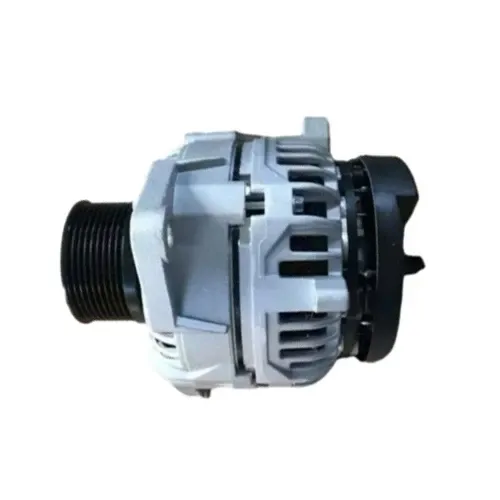
The core advantage of Alternator Heavy Duty comes from the synergy of reinforced structure and durable materials
The stator and rotor are made of high-strength silicon steel sheets stacked together, and the insulation coating on the surface of the silicon steel sheets reduces eddy current losses and improves power generation efficiency; The winding coil is made of high-temperature resistant copper wire, and after multi-layer insulation treatment, the alternator in a truck can withstand working temperatures above 150 ℃, ensuring continuous high load operation without burning out; The shell is made of cast iron or aluminum alloy material. The cast iron version focuses on impact resistance and sealing, suitable for construction sites with high dust. The aluminum alloy version reduces equipment load through lightweight design and has good heat dissipation performance. The bearing adopts a double row ball bearing structure, combined with high-temperature lubricating grease, which can withstand the severe vibration during equipment operation and extend the fault free operation time.
The key criteria for measuring the quality of Alternator Heavy Duty include output stability, structural strength, and environmental adaptability
The voltage fluctuation of the alternator lorry's output should be controlled within ± 2% to ensure that sensitive electronic devices are not affected by voltage fluctuations; The rated power should meet the power demand of the equipment during full load operation, and have an overload capacity of more than 10% to cope with instantaneous high-power equipment startup; The structural strength is reflected in the deformation resistance of the shell, which can withstand collisions and compressions during equipment driving or operation; Environmental adaptability requires stable operation in environments with humidity above 90% and high dust concentration. The insulation resistance of the winding should not be less than 1 megaohm after long-term use.
In practical applications, Alternator Heavy Duty has a wide adaptability to various scenarios
Alternator on a truck provides continuous power for onboard air conditioning, refrigeration units, and communication equipment, ensuring stable output even when the engine is idling; Construction machinery such as excavators and cranes require power supply for hydraulic system control modules, cockpit instruments, work lights, etc., to cope with bumpy and dusty environments; In the ship power system, as an auxiliary power generation equipment, it serves as an emergency power source in the event of a main generator failure, ensuring the operation of key systems such as navigation and communication; The characteristic of withstanding high temperature and vibration in mining equipment enables it to work for a long time in underground or open-pit mines, providing power support for crushing and transportation equipment.
With the increasing electrification of heavy equipment, the innovation of Alternator Heavy Duty continues to deepen
In terms of environmental protection, optimizing magnetic circuit design and material selection can reduce energy consumption and noise during operation; In terms of intelligent upgrading, the integrated voltage regulation module and fault diagnosis sensor can monitor the output status in real time, transmit data to the control system through the device bus, and warn potential faults in advance; Lightweight design uses high-strength alloy materials to reduce weight and equipment fuel consumption while ensuring strength; In addition, the modular structure makes maintenance and replacement more convenient, and key components such as bearings and brushes can be replaced separately, reducing maintenance costs and downtime.
In summary, the alternator on semi truck, with stable output and durable structure as its core, has become a reliable guarantee for heavy equipment power systems through strengthened design and technological innovation. It not only meets the power demand in high load scenarios, but also has advantages in complex environmental adaptability and maintenance convenience, supporting the efficient operation of heavy equipment. In the future, with the development of electric heavy-duty equipment, it will continue to break through in efficient power generation, intelligent control, and environmental performance, providing more suitable power solutions for new energy heavy-duty equipment.
Alternator Heavy Duty FAQs
What is Alternator Heavy Duty? What scenarios is it suitable for?
Alternator Heavy Duty is an electrical equipment designed for high load, long-term operation, using reinforced structures and high-quality materials, with higher durability and stability. It is suitable for harsh environments such as mines, ships, and oil drilling platforms, and can cope with frequent start stop, voltage fluctuations, and extreme temperature conditions to ensure continuous and reliable power supply.
What are the technical advantages of Alternator Heavy Duty compared to regular generators?
Alternator Heavy Duty is typically equipped with high-capacity bearings, enhanced cooling systems, and corrosion-resistant coatings. Core components such as rotors and stators are made of high-grade silicon steel sheets and copper windings, resulting in a 10% -15% increase in efficiency. Its design lifespan can reach more than twice that of ordinary generators, and it supports higher instantaneous overload capacity, making it suitable for industrial applications with sudden loads.
How to maintain Alternator Heavy Duty to extend its lifespan?
Regularly check the lubrication status of the bearings and replenish specialized high-temperature grease every 500 hours. Clean the air filter and heat dissipation channel to prevent dust accumulation from affecting heat dissipation. Check the insulation resistance of the winding every 2000 hours of operation and tighten all electrical connection points. During long-term shutdown, the fuel should be drained and rust prevention procedures should be initiated to avoid oxidation of internal components.
What is the energy efficiency performance of Alternator Heavy Duty? Does it comply with environmental standards?
Modern heavy-duty products typically use electronic regulators and intelligent control systems to increase fuel efficiency to over 40%, and some models comply with EU Stage V or US Tier 4 Final emission standards. Its harmonic distortion rate is less than 3%, causing minimal pollution to the power grid. Some models are also compatible with clean fuels such as biodiesel.
What are the key parameters to consider when choosing an Alternator Heavy Duty?
The primary consideration is the matching degree between rated power and standby power, and it is recommended to reserve a 20% margin to cope with peak loads. Secondly, attention should be paid to voltage regulation accuracy (preferably within ± 1%), frequency stability (50/60Hz ± 0.5%), and protection level (above IP23). For special environments, it is also necessary to confirm whether the explosion-proof certification or three proof (anti salt spray, anti mold, anti moisture) performance meets the requirements.