



Comprehensive Guide to Low RPM Alternator 12V Systems and Applications
Understanding Low RPM Alternators: A Comprehensive Guide
When it comes to power generation in specialized applications, particularly in wind turbines, small engine systems, and electric vehicles, low RPM alternators are essential. These alternators are designed to efficiently produce electricity at lower rotational speeds compared to conventional units. This article provides a thorough overview of low RPM alternators, their benefits, applications, and what to consider when selecting one. Understanding the nuances of these systems ensures optimal performance and reliability.

What is a Low RPM Alternator?
A traditional alternator typically requires a higher RPM (Revolutions Per Minute) to generate sufficient voltage and current. Low RPM alternators, however, are engineered with specific modifications to overcome this limitation. These modifications often include increased winding turns in the stator, stronger magnets in the rotor, and optimized core materials. The goal is to induce a strong enough magnetic field to produce usable electricity even at slower speeds. These alternators are critical in scenarios where high-speed rotation isn’t feasible or desirable. JLT Alternator specializes in manufacturing high-performance low RPM alternators tailored for diverse power solutions.
Key Benefit: Efficient power generation at lower engine speeds, providing reliable electricity in applications where traditional alternators struggle.
Applications of 12V Low RPM Alternators
The versatile nature of 12V low RPM alternators makes them ideal for a wide range of applications. Common uses include:
- Wind Turbines: Generating electricity from low-speed wind power.
- Small Engine Systems: Powering equipment like lawnmowers, generators, and small tractors.
- Electric Vehicles: Charging batteries in electric bikes, scooters, and golf carts.
- Marine Applications: Supplying power to onboard systems in sailboats and other marine vessels.
- Off-Grid Power: Providing electricity in remote locations where grid access is limited.
Key Application Areas:
• Wind Energy Harvesting
• Electric Vehicle Power Systems
• Remote Power Generation
• Marine Auxiliary Power
Low RPM Alternator 12V: Performance Characteristics
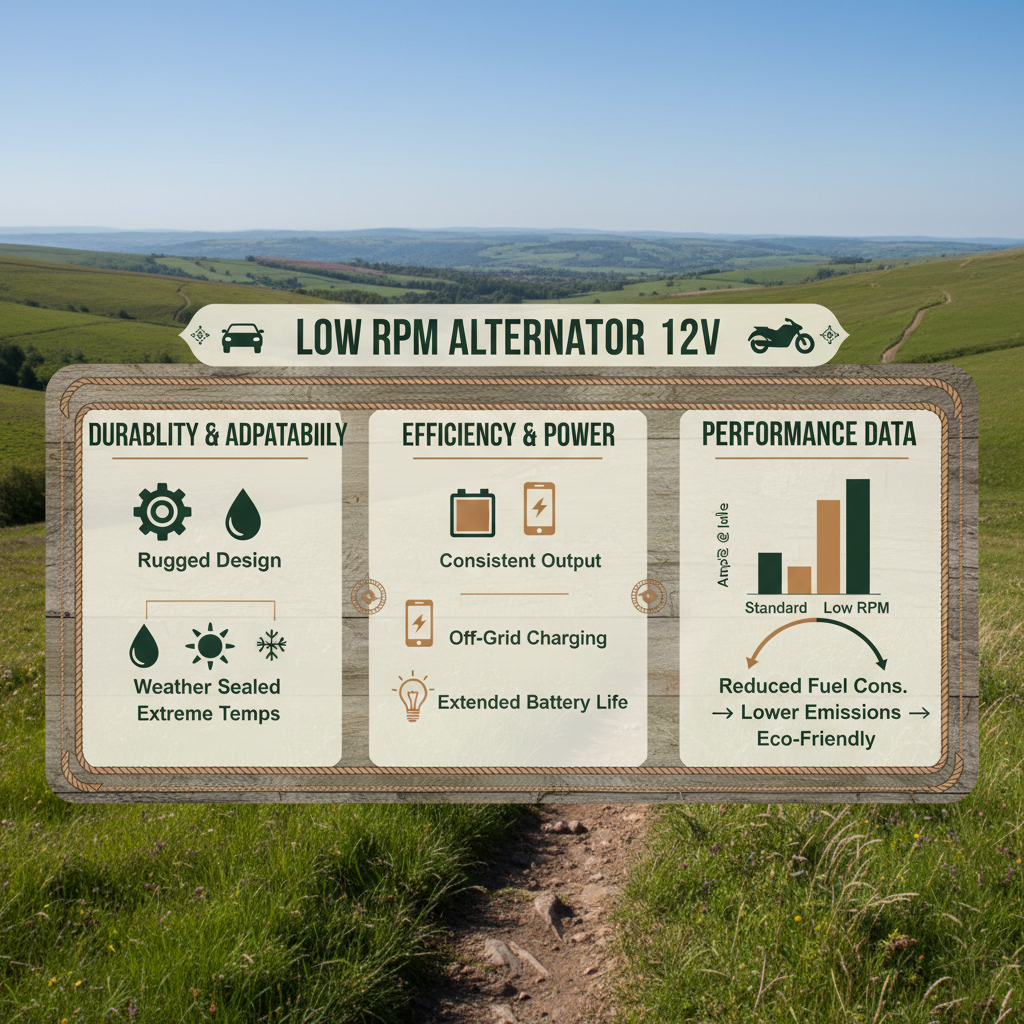
The performance of a low RPM alternator is characterized by its output voltage, current, and efficiency at different rotational speeds. Here’s a comparison to illustrate the benefits:
Factors to Consider When Choosing a Low RPM Alternator
Selecting the right low RPM alternator involves considering several factors. These include the required voltage and current output, the operating RPM range, the application environment, and the overall system efficiency. It's also crucial to choose a reputable manufacturer known for quality and reliability. Consider the alternator's construction materials, bearing type, and the quality of its internal components.
JLT Alternator: Your Trusted Low RPM Alternator Supplier
At JLT Alternator, we specialize in designing and manufacturing high-performance low RPM alternators for a wide range of applications. Our alternators are built with premium materials and undergo rigorous testing to ensure exceptional reliability and efficiency. We offer custom solutions to meet your specific power generation needs. Contact us today to discuss your requirements and find the perfect low RPM alternator for your project.
Conclusion: Powering Your Applications with Low RPM Technology
Low RPM alternators are critical for numerous applications requiring reliable power generation at lower speeds. Choosing a quality alternator from a trusted supplier like JLT Alternator ensures optimal performance and longevity. Embrace the power of low RPM technology and unlock the potential of your systems.
Frequently Asked Questions (FAQs)
What is the typical lifespan of a low RPM alternator?
The lifespan of a low RPM alternator varies depending on operating conditions, load, and maintenance. With proper care and within specified operating parameters, a well-built alternator can last between 5,000 to 10,000 hours. Regular maintenance, including checking brush wear (in brushed alternators), inspecting bearings, and ensuring proper cooling, can significantly extend its lifespan. Environmental factors like dust and moisture can also influence longevity. Choosing a high-quality alternator from a reputable manufacturer like JLT Alternator ensures robust construction and reliable performance.
Are low RPM alternators more expensive than traditional alternators?
Generally, low RPM alternators tend to be more expensive than traditional alternators due to the specialized design and manufacturing processes involved. The increased winding turns, stronger magnets, and optimized core materials contribute to higher production costs. However, the benefits of efficient power generation at lower speeds often outweigh the initial cost, especially in applications where traditional alternators are not suitable. Furthermore, the longevity and reliability of a high-quality low RPM alternator can provide long-term cost savings.
What maintenance is required for a low RPM alternator?
Regular maintenance is crucial for optimal performance and longevity. Key maintenance tasks include: checking and cleaning the air vents to ensure adequate cooling, inspecting the brushes (if applicable) for wear and replacing them when necessary, verifying the tightness of all electrical connections, and periodically checking the bearing for smooth operation. It's also important to protect the alternator from excessive moisture and dust. Refer to the manufacturer's documentation for specific maintenance recommendations. JLT Alternator provides detailed maintenance guides for all its products.