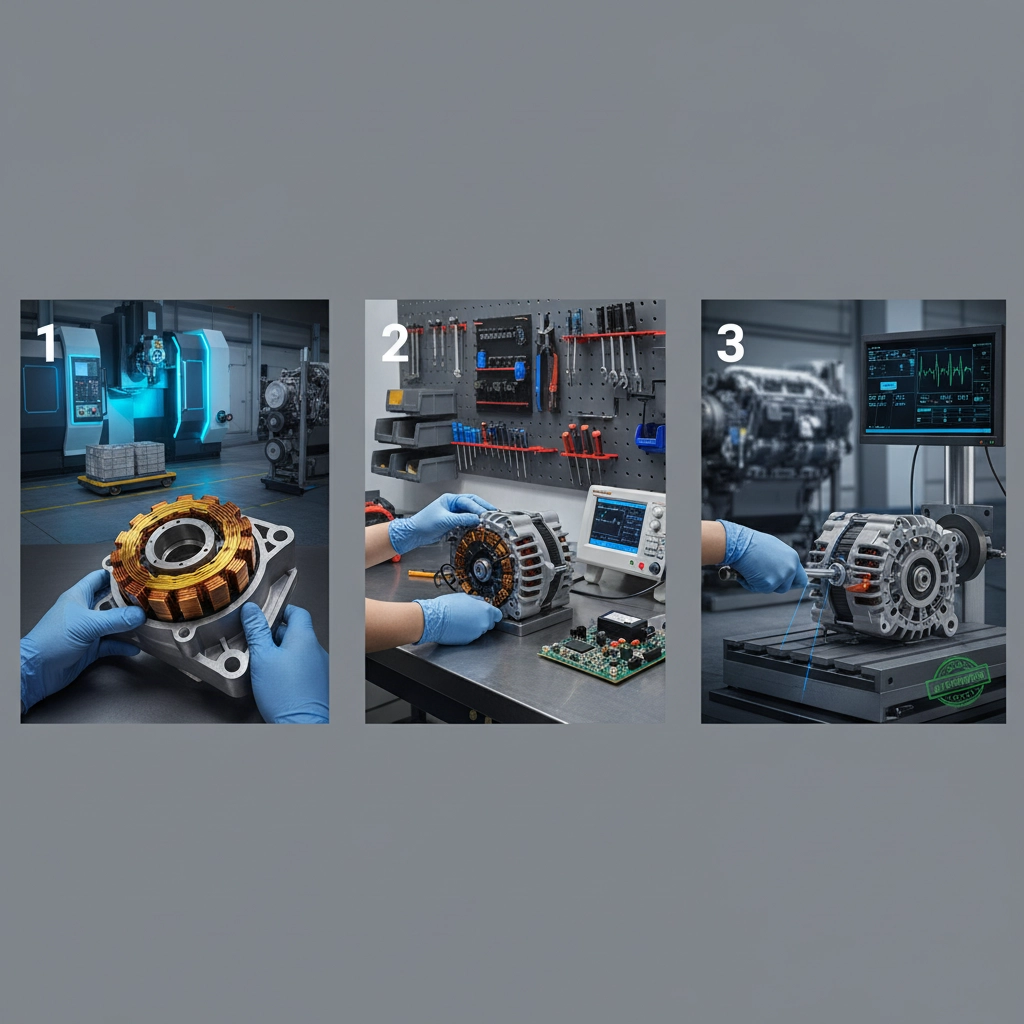
Determining the correct lorry dynamo price is more than a simple matter of comparing quotes; it is a critical financial decision that impacts the long-term operational uptime of commercial fleets. In the heavy-duty transport sector, the alternator—or dynamo—serves as the electrical heart of the vehicle, and choosing a replacement based solely on the lowest initial cost often leads to premature failure and expensive emergency downtime.
Fleet managers and independent operators often struggle with the variance in pricing between OEM replacements and aftermarket solutions. The challenge lies in balancing the immediate budget constraints with the need for stable power generation, as unstable voltage can damage sensitive onboard electronics and increase overall operating costs.
This comprehensive analysis breaks down the cost structures affecting lorry dynamos, examines the technical specifications that justify price differences, and provides a professional framework for evaluating suppliers to ensure you receive the highest return on investment for your vehicle's electrical system.

Core Factors Influencing Lorry Dynamo Pricing

The price of a lorry dynamo is primarily driven by the complexity of the vehicle's electrical requirements and the materials used in construction. For heavy-duty applications, such as those requiring Benz or Volvo alternators, the cost reflects the need for high current output and durability under extreme thermal stress. Materials like high-grade copper winding and reinforced housing are non-negotiable for industrial-grade performance, directly impacting the wholesale price.
Additionally, the manufacturing region and scale play a role. Production centers in Hebei, China, for instance, leverage precision CNC machining and integrated production lines to optimize costs without sacrificing the strict quality control systems required for international export to Europe and America.
Technical Specifications and Their Cost Impact
Not all alternators are created equal, and specific technical parameters significantly shift the lorry dynamo price. Ampere rating is a primary driver; a dynamo designed for high-capacity electronics in a modern heavy truck requires more robust internal components than a basic unit for light commercial use. The precision of the voltage regulator also determines the price, as a high-stability regulator prevents power surges that could fry the vehicle's ECU.
Consider the case of the JFZ280E model for Benz, where specific dimensions (0.26m x 0.255m x 0.21m) and OEM compatibility (0124655328) ensure a perfect fit. When a manufacturer implements 100% factory testing and inspection in accordance with international standards, the added labor and quality assurance costs are reflected in the price, but these costs are offset by the reduction in failure rates.
OEM vs. High-Quality Aftermarket Trade-offs
The market is divided between Original Equipment Manufacturer (OEM) parts and aftermarket alternatives. OEM parts generally carry a premium price due to brand equity and guaranteed fitment. However, professional aftermarket manufacturers with 30 years of experience can provide "intelligent alternator solutions" that match or even exceed OEM durability by addressing common failure points found in original designs, such as unstable power generation or poor adaptability to extreme climates.
For buyers, the key is to look for manufacturers who provide a formal warranty—such as a 6-month guarantee with free maintenance for quality problems. This shifts the risk from the buyer back to the manufacturer, making a high-quality aftermarket option a more economically viable choice than a budget-tier generic part.
Analysis of Relative Cost Drivers in Manufacturing
Understanding the cost structure of a lorry dynamo helps procurement officers identify where value is actually created. The following conceptual index illustrates the relative weight of different manufacturing factors on the final unit price. High-precision CNC machining and dynamic balancing are significant investments that ensure the unit operates without vibration, extending the lifespan of the bearings.
This illustrative framework demonstrates that raw material costs are only one part of the equation. The "Quality Assurance & Testing" segment is crucial; using imported DV testing benches ensures that every unit delivered meets a consistent power output standard, which is the primary reason professional-grade dynamos cost more than "cheap" alternatives.
Evaluating Total Cost of Ownership (TCO)
A common mistake in B2B procurement is focusing on the purchase price rather than the Total Cost of Ownership (TCO). TCO includes the initial lorry dynamo price, installation labor, and the projected cost of downtime. A cheaper alternator that fails after 12 months costs significantly more in the long run than a premium unit that lasts 36 months, especially when considering the loss of revenue from a sidelined truck.
To calculate TCO, fleet managers should evaluate the "Mean Time Between Failures" (MTBF). High-quality units from established manufacturers with 9001 certification typically offer a lower TCO because they minimize the frequency of replacements and reduce the risk of collateral damage to the battery and electrical system.
Common Pitfalls in Low-Cost Procurement
The temptation to reduce the lorry dynamo price by sourcing from unverified suppliers often leads to three primary technical risks. First is the use of inferior copper alloys in the windings, which increases internal resistance and heat, leading to rapid insulation breakdown. Second is the lack of dynamic balancing, which causes premature bearing wear and audible noise.
Thirdly, low-cost units often lack rigorous testing. While a professional factory performs 100% inspection, budget suppliers may only sample 1% of their production. This means there is a high probability of receiving a "lemon" that fails within the first few hundred kilometers of operation, resulting in costly roadside assistance and towing fees.
Professional Procurement Decision Framework
When selecting a supplier for lorry dynamos, buyers should use a weighted matrix that considers more than just the quote. The following comparison framework helps categorize different sourcing options based on their operational impact and risk profile, allowing for a data-driven decision based on the vehicle's role in the fleet.
| Sourcing Option | Initial Cost | Expected Lifespan | Risk Level |
|---|---|---|---|
| Premium OEM | Very High | Very High | Low |
| Certified Aftermarket | Moderate | High | Low/Medium |
| Budget Generic | Low | Low | High |
| Reconditioned Unit | Very Low | Unpredictable | Very High |
| Custom Industrial | High | Very High | Low |
| Wholesale Bulk (Unverified) | Lowest | Low/Medium | High |
For critical long-haul vehicles, the "Certified Aftermarket" or "Premium OEM" paths are the only logical choices. For short-term rentals or low-utilization vehicles, a moderate-cost alternative may suffice. Ultimately, the goal is to align the lorry dynamo price with the criticality of the vehicle's mission.
Frequently Asked Questions
The largest variances are caused by amperage capacity, the quality of copper used in windings, the precision of the voltage regulator, and whether the unit has undergone 100% factory testing and dynamic balancing.
It is not recommended. High-spec trucks often have greater electrical loads; a low-cost dynamo may fail to provide stable power, leading to battery drain and potential damage to the vehicle's sensitive electronic control units.
Look for a guarantee that covers both parts and technical support. A professional manufacturer typically provides at least 6 months of warranty and free maintenance for quality-related defects.
Bulk orders typically reduce the per-unit cost. However, professional manufacturers often accept small orders (MOQ: 1PCS) to support smaller fleets, though the unit price may be slightly higher than massive wholesale lots.
Depending on the customization and packaging requirements, the typical delivery cycle ranges from 7 to 30 days from the time of order confirmation.
Yes, most professional manufacturers offer neutral, colored, or personalized packaging to meet the branding needs of distributors and large-scale fleet operators.
Conclusion
Optimizing your lorry dynamo price requires a shift in perspective from "lowest cost" to "lowest risk." By understanding the relationship between technical specifications—such as amperage and regulatory stability—and the resulting TCO, fleet managers can make procurement decisions that protect their vehicles and their bottom line. Investing in high-quality alternators from experienced manufacturers ensures that the power heart of the vehicle remains stable and efficient.
For those seeking reliable power solutions for commercial or engineering vehicles, detailed product specifications and supplier capabilities can be reviewed at www.jltalternator.com to ensure the chosen unit meets specific operational requirements.