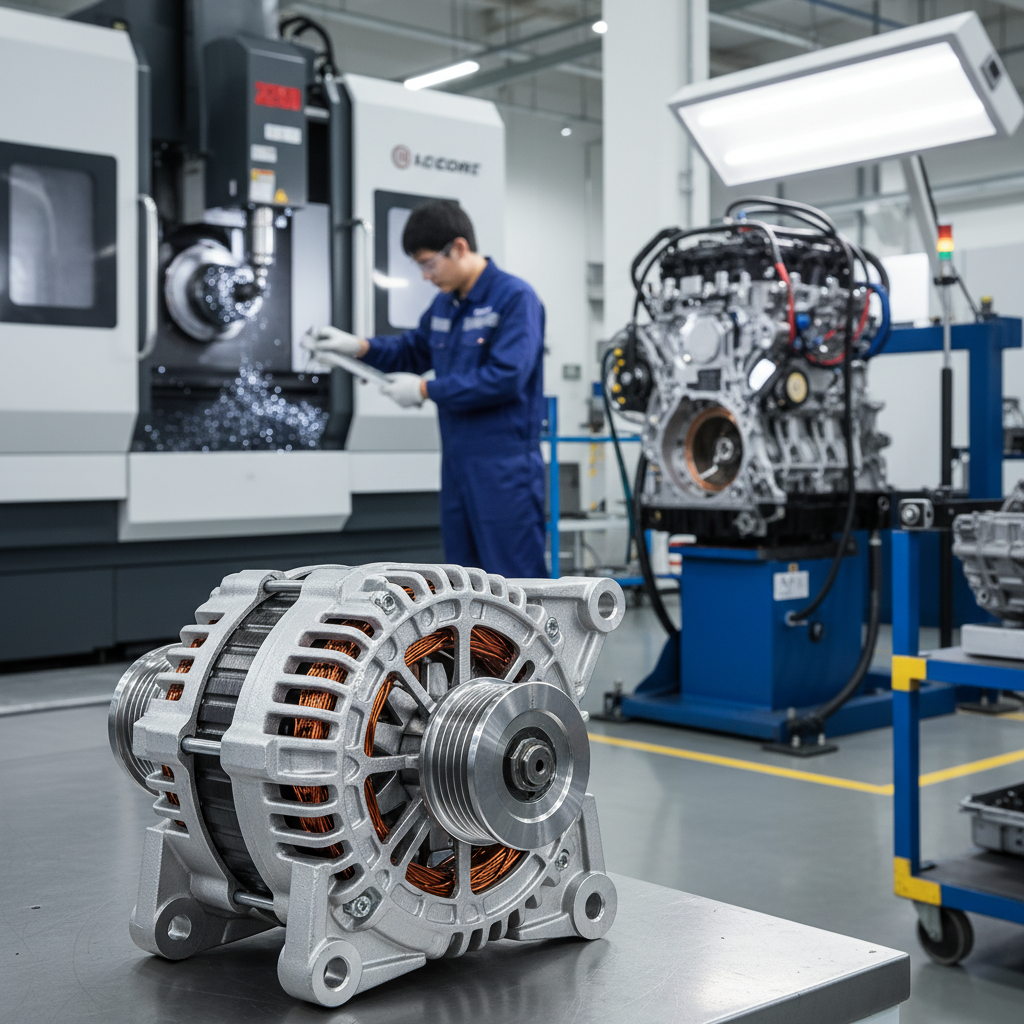
When evaluating the 30 kva alternator price, procurement managers often find themselves balancing the immediate capital expenditure against the long-term operational reliability of their power systems. In the heavy-duty automotive and industrial sectors, the alternator is not merely a component but the electrical heartbeat of the machine, where a discrepancy in quality can lead to costly downtime.
The cost of a high-capacity alternator is influenced by a complex matrix of variables, including winding materials, voltage regulation technology, and the specific OEM requirements of the engine it serves. Whether sourcing for construction machinery or commercial fleets, understanding the drivers behind the pricing is essential for optimizing the Total Cost of Ownership (TCO).
This guide analyzes the economic and technical factors that dictate market pricing for industrial-grade alternators, providing a framework for buyers to distinguish between low-cost substitutes and high-value engineering solutions that ensure consistent power output in demanding environments.

Decoding the Cost Structure of Heavy-Duty Alternators

The pricing of a 30 kVA capacity alternator is rarely a flat fee; it is a reflection of the raw materials and precision engineering required to maintain stability under load. Copper purity in the windings and the grade of the magnetic steel used in the rotor are primary cost drivers, as these determine the efficiency of electromagnetic induction and the heat dissipation capacity of the unit.
Beyond materials, the manufacturing process—including CNC machining for the housing and dynamic balancing for the rotor—adds significant value. A unit that undergoes 100% factory testing and inspection ensures that the power output remains constant regardless of engine RPM, reducing the risk of premature electrical failure in the vehicle's ECU.
Furthermore, the "price" often encompasses the level of certification and warranty provided. For instance, products meeting ISO 9001 standards or providing a 6-month comprehensive warranty offer a lower risk profile for the end-user, justifying a premium over non-certified, generic alternatives.
Technical Specifications Driving Price Variance
Price variance in the alternator market is typically linked to the complexity of the internal regulator and the robustness of the bearing system. High-end alternators utilize intelligent voltage regulators that can adapt to varying temperature environments and load demands, preventing battery overcharging and extending the lifespan of the electrical system.
The choice of bearings—whether standard or heavy-duty sealed units—impacts both the initial cost and the maintenance interval. In construction machinery series, where dust and vibration are constant, the use of reinforced seals is non-negotiable, which naturally increases the production cost compared to standard passenger vehicle alternators.
Another critical factor is the cooling architecture. Forced-air cooling systems or optimized vent designs for high-ambient temperature regions require more complex housing geometry, adding to the manufacturing cost but ensuring the alternator does not suffer from thermal derating during peak operation.
Operational Scenarios and Power Demand Analysis
Different applications demand different levels of electrical resilience. For example, a Caterpillar or Cummins powered excavator operating in a remote mine requires an alternator that can handle extreme voltage spikes and provide steady current to a multitude of hydraulic sensors and lighting systems.
In contrast, commercial long-haul trucks, such as those utilizing Volvo or Scania systems, prioritize fuel efficiency and constant charging for sleeper-cab electronics. The demand here is for a balanced output that doesn't place excessive parasitic load on the engine, which influences the design of the pulley and the efficiency of the rectifier bridge.
Understanding these scenarios allows buyers to avoid over-specifying—paying for capacity they don't need—or under-specifying, which leads to frequent alternator replacements and unplanned vehicle downtime. The alignment of product parameters with the actual load profile is the only way to achieve a true ROI.
Evaluating Energy Efficiency and Output Stability
Stability is measured by the alternator's ability to maintain a steady voltage output despite fluctuations in input speed. This is where the distinction between budget units and professional-grade equipment becomes evident, as the latter utilizes superior diode bridges to minimize ripple current.
When analyzing performance, we look at the efficiency curve—the ratio of electrical power produced to the mechanical energy consumed from the crankshaft. A more efficient alternator reduces fuel consumption and lowers the operating temperature of the engine bay.
30 kva alternator price Performance Metrics
As shown in the benchmark data, the integration of precision-engineered components leads to a marked increase in voltage stability and thermal endurance, which are the primary metrics that justify the investment in premium automotive generators.
Procurement Strategies for Industrial Power Components
Effective procurement starts with the verification of OEM parameters. For example, when sourcing an alternator for a Caterpillar system, verifying the exact article number (such as 101211-8400) ensures that the width, height, and length match the engine mounting bracket perfectly, avoiding costly modifications during installation.
Buyers should evaluate the supplier's quality control system. A manufacturer that employs DV testing benches and dynamic balancing machines can provide documented proof of performance, shifting the procurement decision from a "price-first" to a "value-first" approach.
Additionally, the flexibility of the supplier—such as accepting small order quantities (MOQ: 1PCS) and offering customized packaging—is critical for fleet operators who manage a diverse range of vehicle brands, from Daewoo and DongFeng to Mercedes-Benz and Man.
Evolution of Intelligent Charging Systems
The industry is shifting toward low-carbon upgrades and intelligent power management. Future alternator designs are likely to integrate more sophisticated sensors that communicate with the vehicle's central computer to optimize charging cycles based on battery state-of-charge (SoC) and real-time electrical demand.
This evolution may involve the use of new composite materials for the housing to reduce weight without sacrificing structural integrity, which could potentially lower the parasitic load on the engine and improve overall vehicle fuel efficiency.
As electric and hybrid systems become more prevalent in heavy machinery, the role of the alternator is evolving into a complementary power module. This transition depends on the integration of high-efficiency rectification and the ability to operate seamlessly within hybrid power grids.
Comparative Selection Framework for Alternator Sourcing
Selecting the right alternator requires a comparative analysis of technical capabilities versus the specific environmental stressors of the application. A budget-focused approach may work for light-duty utility vehicles, but industrial machinery requires a different set of criteria.
The following table provides a decision-making matrix based on typical industry requirements and technical trade-offs encountered during the sourcing process.
| Application Type | Critical Parameter | Recommended Spec | Cost Driver |
|---|---|---|---|
| Mining Machinery | Dust Resistance | IP67 Sealed Housing | Reinforced Seals |
| Long-Haul Logistics | Fuel Efficiency | Low-Drag Pulley | Precision Balancing |
| Urban Transit | Cycle Frequency | High-Grade Carbon Brushes | Wear-Resistant Materials |
| Cold Climate Fleet | Start-up Torque | Low-Temp Lubricants | Specialized Bearings |
| Emergency Power | Voltage Stability | Active AVR Regulation | Advanced Electronics |
| General Industrial | Interchangeability | Standard OEM Fitment | CNC Machining |
By aligning the specific application needs with the corresponding technical specifications, procurement officers can justify the investment in higher-quality components that reduce the frequency of maintenance and prevent catastrophic electrical failure.
Frequently Asked Questions
Conclusion
Navigating the complexities of the 30 kVA alternator market requires a shift in perspective from focusing on the purchase price to evaluating the lifecycle value. By prioritizing technical precision, verified OEM compatibility, and robust quality control, fleet managers can ensure that their vehicles maintain a stable power heart, reducing operational risks and maximizing efficiency.
For those seeking high-performance power solutions for commercial or engineering vehicles, reviewing the specialized product range and manufacturing capabilities available through www.jltalternator.com can provide the necessary technical context for an informed procurement decision.