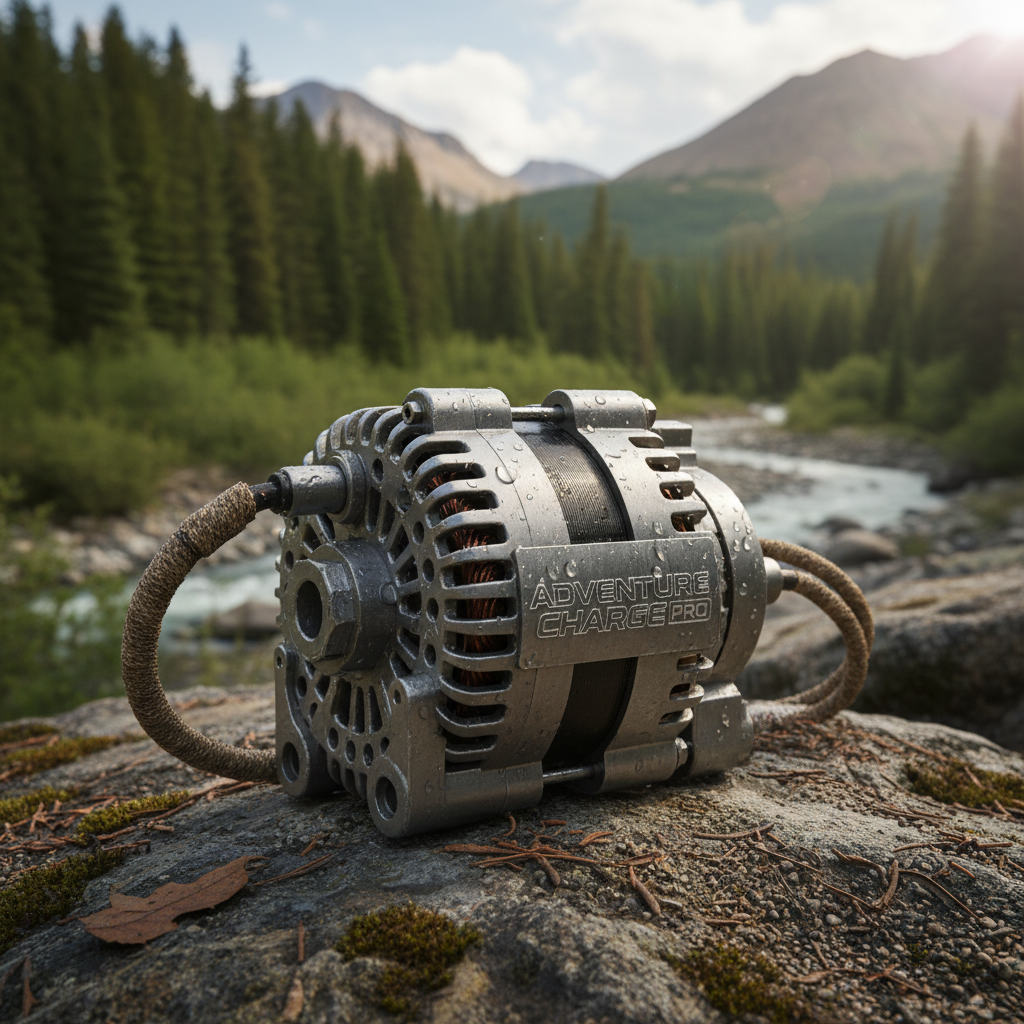
When a heavy-duty vehicle fails to start or electrical systems begin to flicker, the culprit is often a degraded charging system. For fleet managers and logistics operators, the reliability of the alternator is not just a technical detail—it is the difference between a productive workday and costly roadside downtime.
The landscape of power generation for commercial vehicles has shifted toward higher efficiency and better heat dissipation to accommodate the increasing electrical loads of modern trucks. Selecting the right partners among truck alternator manufacturers requires an understanding of both OEM specifications and the actual environmental stressors the vehicle faces.
This analysis examines the critical technical factors in alternator selection, the evolution of charging stability in heavy-duty machinery, and the practical frameworks for evaluating manufacturer quality.


The alternator serves as the electrical heart of any heavy truck, converting mechanical energy from the engine into electrical energy to power the vehicle's systems and maintain battery charge. In the context of global logistics, the cost of a single failure far exceeds the price of the component itself due to lost time and potential cargo damage.
For manufacturers based in hubs like Hebei, China, the focus has shifted from simple production to solving specific pain points: unstable power generation and premature wear. Modern units must now handle complex electronics, including GPS, telematics, and advanced safety sensors, without compromising the alternator's lifespan.
A high-performance alternator is defined by the synergy of its internal components. The rotor and stator must be wound with high-purity copper to minimize resistance and heat buildup, while the voltage regulator must be capable of millisecond-level adjustments to prevent overcharging the battery.
Durability is further ensured through the use of precision CNC machining. For instance, the housing must be designed for optimal airflow, and the bearings must be rated for extreme rotational speeds and temperatures. When examining products like the JFZ2516 for Weichai-Deutz engines, the tight tolerances in dimensions (such as the 0.26m width and 0.255m height) are critical for a seamless fit and vibration reduction.
Quality control involves a rigorous testing cycle. A professional manufacturing process includes dynamic balancing and imported DV testing benches to ensure that every unit produced meets international standards for high-frequency sampling before leaving the factory floor.
Consistency in voltage output is the primary metric for assessing alternator quality. Fluctuations in power can lead to erratic sensor readings in modern trucks or, worse, the failure of the Electronic Control Unit (ECU).
The effectiveness of a charging system is not measured by its peak output, but by its ability to maintain a stable voltage curve under maximum electrical load and varying engine speeds.
To achieve this, manufacturers integrate advanced rectification systems. By reducing "ripple voltage"—the small AC components that remain after DC conversion—the system protects sensitive onboard electronics and extends the life of the battery.
Different vehicle types demand different charging characteristics. A long-haul Volvo or Scania truck requires a steady, high-capacity charge to support sleeper cabs and auxiliary heating, whereas construction machinery, such as those using Caterpillar or Kubota components, faces high-vibration environments and dust ingress.
The following index illustrates the relative priority of technical factors across different application segments, highlighting how "Durability" and "Voltage Stability" are weighted differently depending on the operational environment.
In construction and mining environments, alternators are subjected to extreme thermal cycles and physical shocks. A typical industrial setting involves machinery operating in dusty quarries where the alternator must be sealed against particulates while maintaining efficient cooling. This is where the distinction between standard and specialized "Construction Machinery Series" alternators becomes apparent.
For these users, the focus shifts toward ease of maintenance and replacement. The ability to source a unit with a fast delivery cycle (e.g., 7-30 days) and a guaranteed warranty period is essential for minimizing the downtime of expensive excavators or loaders.
The industry is moving toward "smart" charging systems that communicate directly with the engine's ECU to optimize fuel efficiency. By reducing the alternator's load during acceleration and increasing it during braking or coasting, vehicles can achieve marginal but significant gains in fuel economy.
Furthermore, there is a growing trend toward low-carbon upgrades in manufacturing. This includes the use of more sustainable materials in the housing and more efficient winding processes that reduce energy consumption during production.
The challenge for future systems will be managing the massive electrical demands of autonomous driving sensors and electric auxiliary systems, which will likely push alternator outputs toward higher amperages while requiring even stricter thermal management.
Procuring alternators for a mixed fleet—ranging from Cummins and Daewoo to Mercedes-Benz and MAN—requires a standardized evaluation framework. Rather than focusing solely on price, procurement officers should analyze the total cost of ownership, which includes the frequency of replacement and the reliability of the supplier's after-sales support.
A critical factor is the manufacturer's flexibility. Companies that can accept small orders (MOQ: 1PCS) and provide custom packaging options are often better suited for specialized repair shops and smaller fleet operators who cannot maintain massive inventories.
The following table provides a relative suitability matrix for different alternator categories based on common operational requirements.
| Category | Environmental Stress | Primary Requirement | Recommended Fit |
|---|---|---|---|
| Heavy Truck (Long Haul) | Moderate | High Amp Stability | Volvo / Scania / MAN |
| Construction Machinery | Extreme | Dust/Shock Resistance | Caterpillar / Kubota |
| Regional Logistics | High (Stop-Start) | Quick Recovery Cycle | Howo / DongFeng |
| Agricultural Gear | High (Seasonal) | Low-Idle Charging | Perkins / Mitsubishi |
| Specialized Engines | Variable | OEM Spec Compliance | Weichai / Yu Chai |
| Urban Transit | Moderate | Continuous Low Output | Daf / Nissan |
The lifespan varies based on usage and environment, but a high-quality industrial alternator typically lasts between 150,000 to 300,000 kilometers. However, in construction or mining settings, the lifespan is often measured in operating hours rather than distance, as high vibration and dust accelerate wear on bearings and brushes. Regular inspection of the belt tension and cleaning of the ventilation ports can significantly extend the service life of the unit.
Compatibility is verified through the OEM part number and the Catalog Group. For example, the OEM number 13024500 is a specific identifier for certain Weichai-Deutz applications. Beyond the part number, you must verify the physical dimensions (width, height, and length) and the mounting bracket configuration to ensure it fits the engine block without modification. Checking the amperage and voltage ratings against the vehicle's electrical requirements is also mandatory.
Common indicators include a dimming of headlights, slow engine cranking, or a warning light on the dashboard. In heavy machinery, you might notice auxiliary hydraulic systems performing sluggishly due to low voltage. Auditory signs, such as a high-pitched whining or grinding noise, usually indicate bearing failure. If the battery is repeatedly draining despite being new, the alternator's diode bridge or voltage regulator is likely compromised.
Many large-scale manufacturers require bulk orders, which forces fleet operators to tie up capital in excess inventory. A supplier that accepts a Minimum Order Quantity (MOQ) of 1 piece allows operators to implement "just-in-time" maintenance. This is particularly useful for mixed fleets where different brands of trucks (e.g., a mix of Volvo and Cummins) require different alternator models, preventing the need to store large quantities of every specific variant.
OEM (Original Equipment Manufacturer) parts are made to the exact specifications of the vehicle brand. High-quality aftermarket alternators from professional manufacturers strive to match or exceed these specs using similar materials. The key is to look for manufacturers with ISO 9001 certifications and rigorous factory testing. While OEM parts are guaranteed to fit, professional aftermarket options often provide better value and faster delivery times without sacrificing reliability.
Extreme cold increases the electrical demand on the battery during startup, placing a higher initial load on the alternator. Conversely, extreme heat can lead to thermal throttling or failure of the voltage regulator. High-quality alternators use temperature-compensated regulators that adjust the charging voltage based on the ambient temperature, ensuring the battery is sufficiently charged in winter without being boiled dry in the summer.
The stability of a commercial vehicle's electrical system depends entirely on the quality and precision of its alternator. As trucks evolve to include more electronic complexity, the demand for manufacturers who prioritize technical rigor over mass-market pricing becomes more critical.
By focusing on verified OEM parameters, rigorous testing standards, and a supportive after-sales framework, fleet operators can ensure that their vehicles remain on the road, minimizing downtime and optimizing the total lifecycle cost of their power systems.