0%

Table of Contents

The world runs on cooling and power, plain and simple. From keeping our food fresh to powering the factories that build everything around us, the efficient operation of ac compressor and alternator systems is critical. You don't realize how much you rely on them until something breaks down, and believe me, I’ve seen plenty break down. I’ve spent the last decade crawling under trucks, into server rooms, and alongside construction crews, and a reliable ac compressor and alternator isn't just a convenience – it's the backbone of countless operations. Understanding these components isn’t just about mechanical know-how; it’s about minimizing downtime, maximizing efficiency, and frankly, keeping things running smoothly when people are depending on it.

The demand is only growing. Developing nations are rapidly industrializing, requiring more robust power and cooling infrastructure. Existing infrastructure in developed countries is aging and needs replacing. The push for electric vehicles directly impacts alternator technology. Even the shift towards greener refrigerants for ac compressors forces innovation. We're seeing increased complexity, stricter environmental regulations, and a growing need for preventative maintenance. It’s no longer enough to just swap out a faulty unit; we need systems built for longevity, easy servicing, and minimal environmental impact.

I've seen first-hand the ripple effect of a failed ac compressor or alternator. A refrigeration unit going down on a food transport truck means spoiled goods and lost revenue. An alternator failing on a construction site brings projects to a standstill. A disruption in a data center? Well, that’s a whole different level of headache. That’s why the quality, reliability, and availability of ac compressor and alternator components are paramount, and why understanding their intricacies is becoming increasingly crucial across a wide range of industries.


The Critical Role of ac Compressor and Alternator Systems in Modern Industries

The Core Functionality of ac compressor and alternator

The Critical Role of ac Compressor and Alternator Systems in Modern Industries

At their most basic, an ac compressor circulates refrigerant to facilitate cooling, while an alternator converts mechanical energy into electrical energy. But it’s never that simple on the job site. Compressors need to withstand high pressures and varying temperatures. Alternators need to consistently deliver reliable power output, even under heavy loads. The quality of materials and construction—the windings in an alternator, the seals in a compressor—that’s what determines their lifespan and performance.

I've learned to appreciate the subtle differences in design. A rotary compressor performs differently than a scroll compressor, each with strengths and weaknesses depending on the application. Similarly, brushed alternators are more straightforward but require more maintenance compared to brushless designs. Knowing these nuances makes a difference when you’re troubleshooting a system under pressure.

Global Significance and Industry Impact

The reach of ac compressor and alternator technology is global. The United Nations estimates that over 1 billion people worldwide lack access to reliable electricity, driving demand for robust and efficient power generation systems. In developing economies, reliable refrigeration is crucial for preserving food supplies and reducing waste—a significant issue addressed by efficient ac compressors. The ISO standards governing these components demonstrate a commitment to quality and interoperability on a global scale.

The impact extends across nearly every industry. Automotive, HVAC, manufacturing, marine, and even aerospace all depend on these core components. A breakdown in any of these sectors has cascading effects on the supply chain and the economy. We're also seeing a growing concern with the environmental impact of traditional refrigerants used in ac compressors, driving the development of more sustainable alternatives.

The challenge lies in balancing performance, cost, and environmental responsibility. It's not enough to just build a compressor or alternator; it needs to be designed for longevity, ease of maintenance, and minimal environmental impact. That's the sweet spot we're all striving for.

Defining ac Compressor and Alternator Systems

An ac compressor, fundamentally, is a pump. It takes low-pressure refrigerant gas and compresses it into a high-pressure, high-temperature gas, which then circulates through the cooling system. The type of compressor – rotary, scroll, reciprocating – dictates its efficiency and application. I’ve spent hours tracing refrigerant lines, diagnosing leaks, and understanding the intricacies of each system.

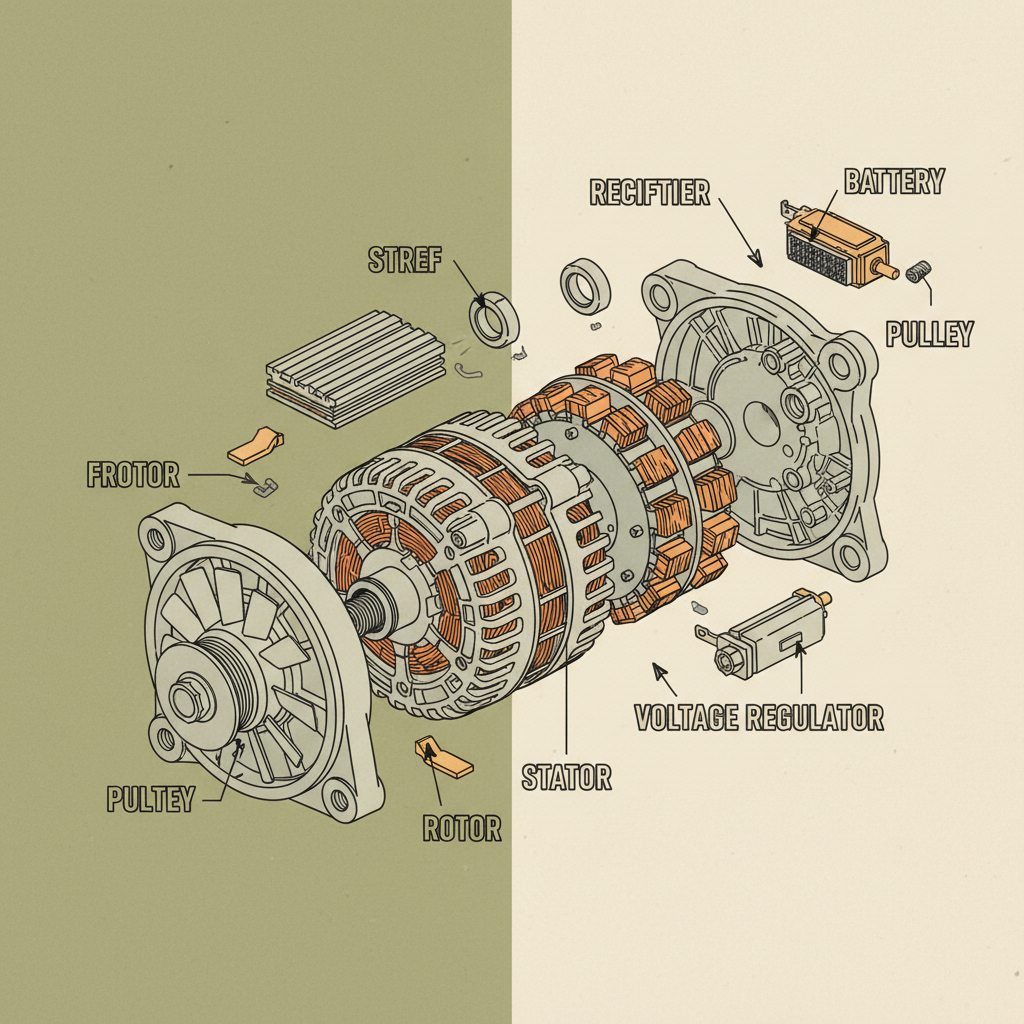
An alternator, on the other hand, transforms mechanical energy into electrical energy. Think of it as the power source for your vehicle or backup generator. It uses electromagnetic induction to generate alternating current (AC), which then powers various electrical components. The stator and rotor are key components, and their quality directly impacts the alternator’s output and reliability.

These systems aren’t isolated; they work in tandem. In a vehicle, the alternator powers the ac compressor's motor. In a power generation setup, an alternator might provide the electricity to run cooling systems. Understanding this interplay is critical for effective maintenance and troubleshooting. This synergy between ac compressor and alternator truly makes these a critical duo.

Key Performance Factors of ac Compressor and Alternator

When evaluating an ac compressor and alternator, several factors stand out. Durability is paramount. We're talking about components that need to withstand harsh environments, constant vibration, and extreme temperatures. Scalability matters, too—can the system be expanded or adapted to meet changing needs?

Cost-efficiency is always a consideration, but it's not just about the initial purchase price. You have to factor in maintenance costs, energy consumption, and potential downtime. A cheap compressor that fails frequently ends up costing more in the long run.

ac Compressor and Alternator Performance Ratings


Real-World Applications and Use Cases

You'll find ac compressor and alternator systems everywhere. In remote industrial zones, a reliable alternator ensures uninterrupted power for critical machinery. In post-disaster relief operations, portable generators equipped with robust alternators provide essential electricity for field hospitals and communication centers.

The automotive industry is a massive consumer, obviously. But consider refrigerated transport, keeping food fresh from farm to table. Or the HVAC systems in commercial buildings, providing comfortable climates for millions. Every grocery store, every office building, every data center – they all rely on these components functioning correctly.

The Long-Term Value Proposition

Investing in high-quality ac compressors and alternators isn’t just about avoiding breakdowns; it’s about realizing long-term cost savings. More efficient systems consume less energy, reducing operating expenses. Longer lifespans mean fewer replacements, lowering maintenance costs. And a reduced environmental footprint contributes to a more sustainable operation.

There’s a certain peace of mind that comes with knowing your systems are reliable. It builds trust with clients, ensures business continuity, and allows you to focus on your core operations instead of constantly firefighting. It’s an investment in stability, efficiency, and a responsible future.

Future Trends and Technological Advancements

We’re seeing a significant push towards more environmentally friendly refrigerants in ac compressors, driven by regulations like the Kigali Amendment to the Montreal Protocol. Electric and hybrid vehicles are fueling innovation in alternator design, focusing on higher efficiency and lighter weight. Digitalization plays a huge role, with remote monitoring and predictive maintenance becoming increasingly common.

I'm particularly excited about advancements in variable-speed compressors and alternators. These allow for more precise control and optimized energy consumption, adapting to changing demands. The integration of IoT sensors enables real-time data analysis, allowing for proactive maintenance and preventing costly failures.

These aren’t just theoretical improvements. I've seen them translate to significant cost savings and increased reliability on construction sites. This is about not just meeting current needs, but proactively preparing for the future of cooling and power.

Summary Table of ac Compressor and Alternator Trends

Trend Category Specific Development Impact on Performance Implementation Timeline
Refrigerant Technology Transition to R32 and CO2 Reduced Global Warming Potential (GWP) Ongoing (2023-2030)
Alternator Design Brushless DC Alternators Increased Efficiency, Reduced Maintenance Short-Term (2024-2026)
Control Systems Variable Speed Technology Precise Temperature Control, Energy Savings Medium-Term (2025-2028)
Manufacturing Processes Additive Manufacturing (3D Printing) Reduced Material Waste, Complex Designs Long-Term (2028+)
Data Analytics Predictive Maintenance Algorithms Reduced Downtime, Optimized Lifespan Ongoing (2024+)
Materials Science Lightweight Composite Materials Improved Energy Efficiency, Reduced Weight Medium-Term (2026-2030)

FAQS

What's the typical lifespan of a heavy-duty ac compressor used in commercial refrigeration?

In my experience, a well-maintained, heavy-duty compressor in commercial refrigeration can last anywhere from 10 to 15 years, sometimes even longer. It really comes down to the quality of the initial installation, regular preventative maintenance – oil checks, refrigerant levels, cleaning coils – and the operating environment. If it's constantly being overworked or exposed to corrosive elements, you're looking at a shorter lifespan. A good maintenance schedule is crucial for maximizing longevity.

How do I know when an alternator is failing, and what are the common warning signs?

The most common signs of a failing alternator are dimming headlights, a warning light on the dashboard, difficulty starting the vehicle, or a whining noise coming from the engine. You might also experience electrical issues like power windows operating slowly or the radio cutting out. A voltmeter can be your best friend here. If the voltage is consistently below 13.5 volts while the engine is running, that’s a red flag. Don't ignore these signs; a failing alternator can leave you stranded.

What's the difference between rotary, scroll, and reciprocating ac compressors, and what are their ideal applications?

Rotary compressors are generally quieter and more efficient for smaller applications like residential AC units. Scroll compressors are known for their reliability and energy efficiency, making them ideal for medium-sized commercial systems. Reciprocating compressors are more robust and can handle higher pressures, making them suitable for larger industrial refrigeration systems. Choosing the right type depends heavily on the cooling load and the specific application requirements. A mismatch can lead to inefficiencies and premature failure.

Are brushless alternators really worth the extra cost compared to brushed alternators?

In almost every case, yes. Brushless alternators eliminate the need for carbon brushes, which wear out over time, requiring regular replacement. This translates to significantly reduced maintenance and a longer lifespan. They're also typically more efficient and produce less electromagnetic interference. While the initial cost is higher, the long-term savings on maintenance and increased reliability usually make them a worthwhile investment, especially in demanding applications.

What are some common mistakes to avoid when installing or servicing ac compressors and alternators?

Over or undercharging refrigerant is a big one with compressors. Always follow the manufacturer’s specifications. With alternators, improper wiring or loose connections can cause significant damage. Also, neglecting to properly clean the components before installation can introduce contaminants that shorten their lifespan. And remember, safety first! Always disconnect the power source before working on electrical components. A rushed job is a recipe for disaster.

How is the move to electric vehicles impacting the demand for alternators?

It's causing a shift, definitely. Traditional alternators are becoming less common in fully electric vehicles as they don't have an internal combustion engine to drive them. However, electric vehicles still need power for accessories and battery charging, and sophisticated DC-DC converters are taking their place. These converters perform a similar function to alternators, but are more efficient and specifically designed for electric vehicle applications. This means the demand for advanced power conversion technology is actually increasing, even as traditional alternator demand declines.

Conclusion

Understanding ac compressor and alternator technology is no longer a niche skill; it’s a fundamental requirement for anyone involved in industries reliant on cooling and power. From maximizing efficiency and minimizing downtime to embracing sustainable practices and adapting to emerging technologies, a solid grasp of these components is crucial for success. Investing in quality components and prioritizing preventative maintenance are key to unlocking long-term value and ensuring operational reliability.

Looking ahead, the integration of smart technologies, the adoption of greener refrigerants, and the continued evolution of electric vehicle powertrains will drive further innovation in this field. Stay informed, prioritize training, and embrace the advancements. The future of cooling and power is constantly evolving, and those who adapt will be best positioned to thrive. For reliable ac compressor and alternator solutions, visit our website: www.jltalternator.com


Kevin Garcia

Kevin Garcia

Kevin Garcia is a Design Engineer specializing in intelligent alternator systems at JLT Alternator. He focuses on integrating advanced technology into our products to improve adaptability and solve pain points related to power instability and alternator lifespan. Kevin’s role involves utilizing CNC machining and overseeing the testing phase to ensure
Previous Reliable Power Solutions with the Versatile Alternator 10kva
Next Premium A1 Alternators for Vehicles TwoWheelers
Copyright © 2026 HEBEI JINLITONG AUTO PARTS CO.,LTD. All Rights Reserved. Sitemap | Privacy Policy | Top Blog